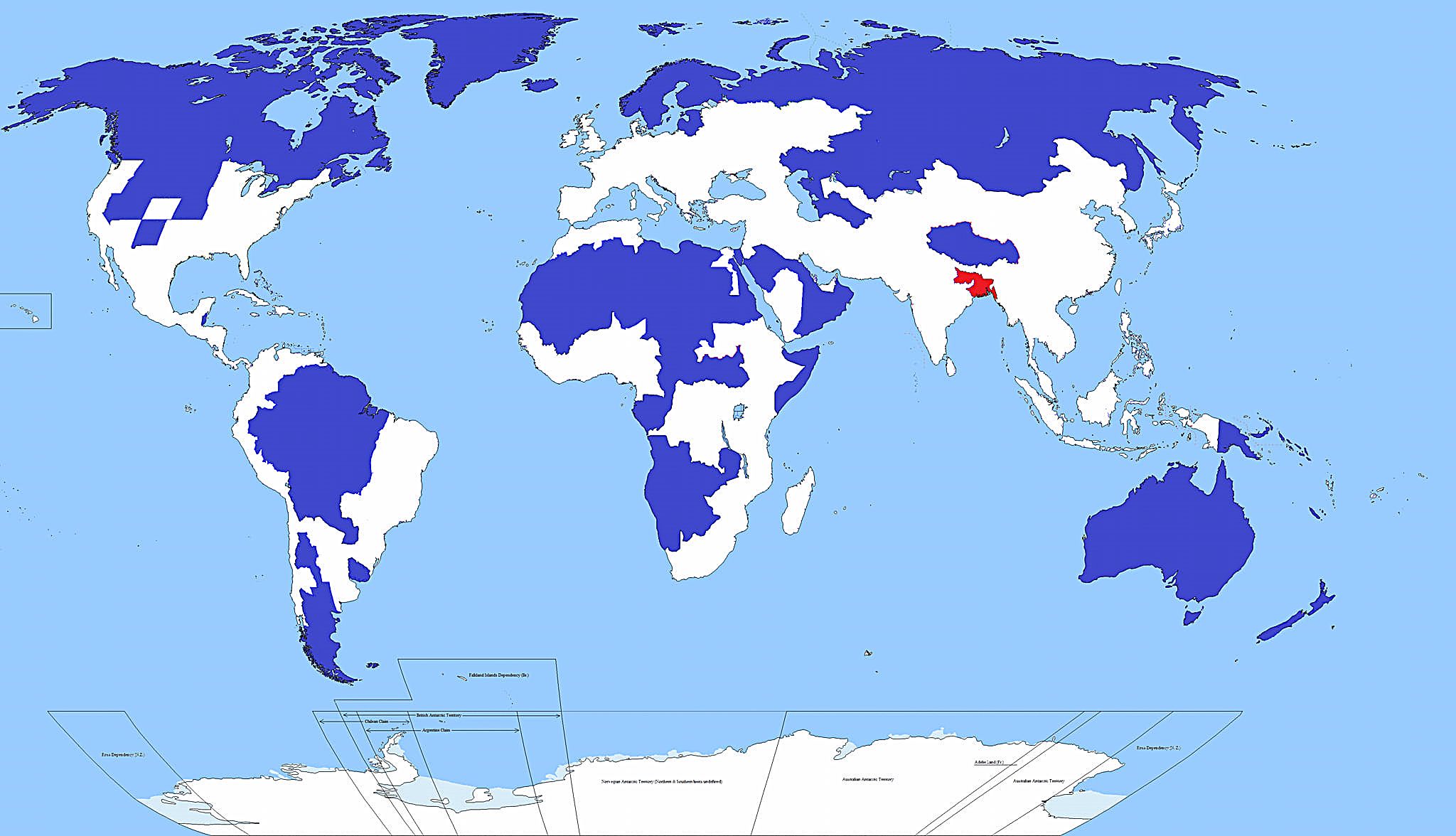
Map by Reddit user MohanBhargava
Take a long look at this map. That tiny red area in Asia contains more people than all the blue regions combined. Yes, you read that right. More humans live packed into that small red zone than in the entire rest of the highlighted world.
This isn’t just a fun fact to impress your friends at dinner parties. It’s a fundamental reality that shapes everything from global economics to climate policy, yet most of us never really grasp the scale of it.
Where Everyone Actually Lives
The red area encompasses parts of China, India, Bangladesh, and surrounding regions. This zone, roughly the size of the eastern United States, houses over 4 billion people. That’s more than half of everyone on Earth squeezed into what looks like a postage stamp on a world map.
Meanwhile, all those blue areas spanning across North America, Europe, Russia, Australia, Brazil, and most of Africa? They collectively hold fewer people than that single red zone. Canada, the second-largest country by land area, has about the same population as Tokyo’s metropolitan area.
Why This Matters More Than You Think
Understanding population density isn’t just geography trivia. It explains why certain regions dominate global manufacturing, why some areas face severe environmental pressures, and why migration patterns flow the way they do.
The red zone didn’t become so densely populated by accident. River valleys like the Ganges and Yangtze, fertile plains, and favorable climates created perfect conditions for agriculture thousands of years ago. These advantages compounded over millennia, creating the population powerhouses we see today.
The Future Implications
As technology continues to shrink our world, these population centers become even more influential. The apps on your phone, the products in your home, and the global supply chains that keep everything running all flow through these densely packed regions.
Climate change impacts will also be felt most acutely here, where billions of people depend on predictable weather patterns for food and water security. When you hear about global challenges, remember that solutions must work for this red area first and foremost.
A New Perspective on “Empty” Spaces
Next time you look at a world map, remember this image. Those vast blue expanses that look so significant? They’re mostly empty by human standards. The real action, the bulk of human civilization, clusters in spaces that barely register on a standard map projection.
This population reality should humble anyone making grand pronouncements about global issues. The world’s center of gravity isn’t where most of us think it is.
Help us out by sharing this map: