Map by Reddit user Appropriate-Breath24
Ever wondered why the same flight from San Francisco to Dubai looks like a gentle arc on one map but a dramatic curve on another? You’re looking at one of cartography’s most fascinating puzzles: how we squeeze our round planet onto flat surfaces.
The images above show the exact same flight path mapped using two different projections. On the polar view (top), the route appears as a smooth, logical arc. On the standard world map (bottom), it looks like the pilot took a massive detour through the Arctic.
Spoiler alert: both are showing the same path, and that curved route is actually the shortest distance between the two cities.
The Shortest Distance Between Two Points
Here’s where things get interesting for our slightly-above-average-IQ readers.
On a sphere like Earth, the shortest distance between two points isn’t a straight line as we’d imagine on paper. It’s what mathematicians call a “great circle” route.
Think of it like stretching a rubber band between San Francisco and Dubai on a globe. The band naturally follows the curvature of the Earth, creating what appears to be a curved path when flattened onto a map.
Airlines discovered this centuries-old mathematical principle saves them hundreds of miles and thousands of dollars in fuel. That seemingly roundabout journey through the Arctic actually shaves significant distance off the trip compared to what looks like a “straight” line on a flat map.
Map Projections: The Art of Compromise
Every world map is a compromise. You simply cannot perfectly represent a three-dimensional sphere on a two-dimensional surface without some distortion.
The Mercator projection (like the bottom image) preserves angles and shapes reasonably well, making it perfect for navigation, but it severely distorts distances, especially near the poles.
The polar projection (top image) gives us a different perspective, literally. Centered on the North Pole, it shows why Arctic routes make perfect sense. What looks like a detour on a standard map reveals itself as the most direct path when viewed from above the pole.
Why This Matters Beyond Geography Class
Understanding map projections helps explain why Greenland looks enormous on some maps but tiny on others, why Antarctica appears impossibly wide, and why your GPS sometimes suggests routes that seem counterintuitive. It’s a reminder that our perception of the world is shaped by how we choose to represent it.
Next time you’re tracking a flight online and notice it’s taking what seems like the long way around, remember: your pilot isn’t lost. They’re following the wisdom of spherical geometry, taking advantage of our planet’s curvature to get you there faster and more efficiently.
The Earth might be round, but our understanding of it is beautifully complex.
Help us out by sharing this map:
You May Also Like:
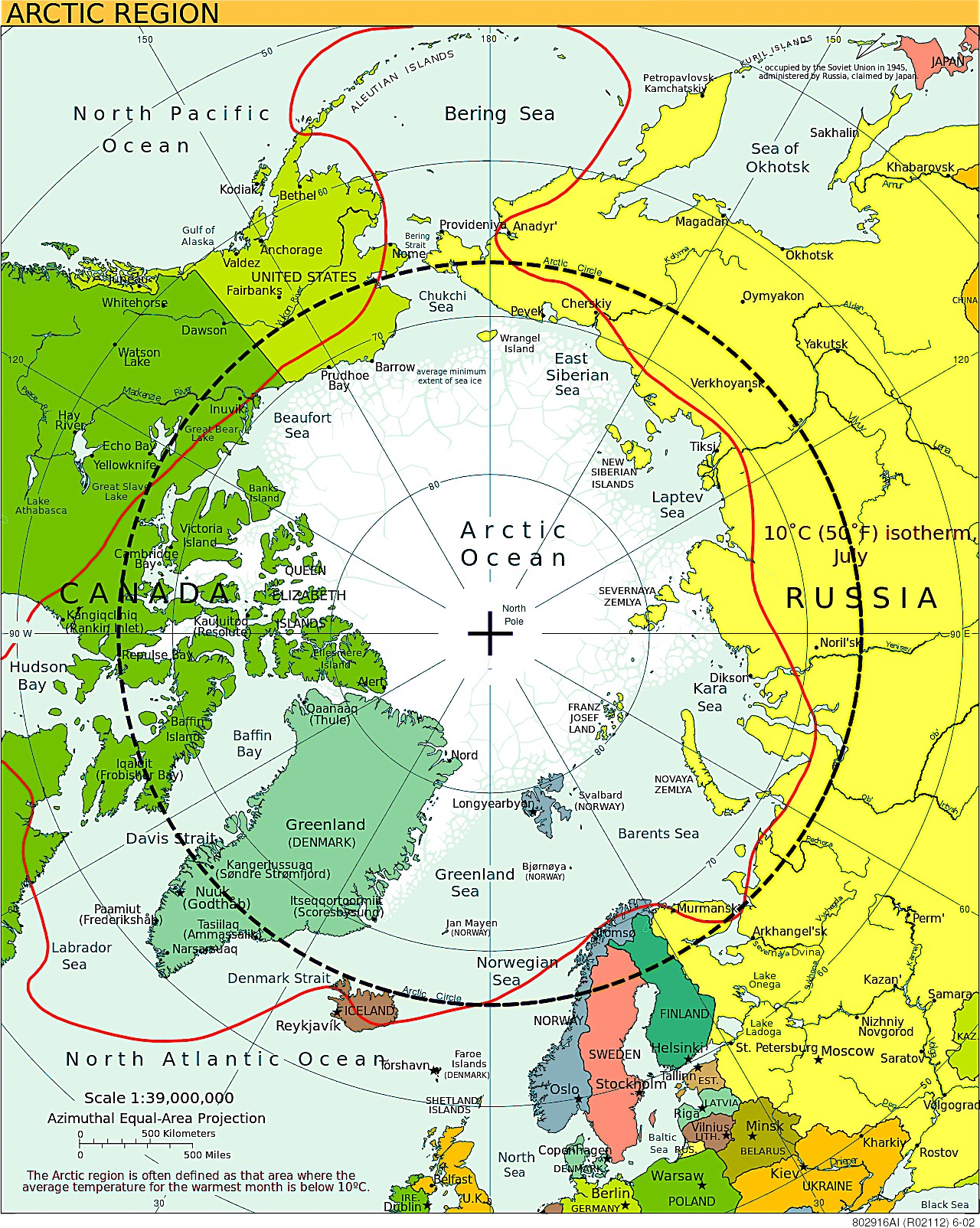
Arctic Circle Region Map: Temperature Line Redefining the North
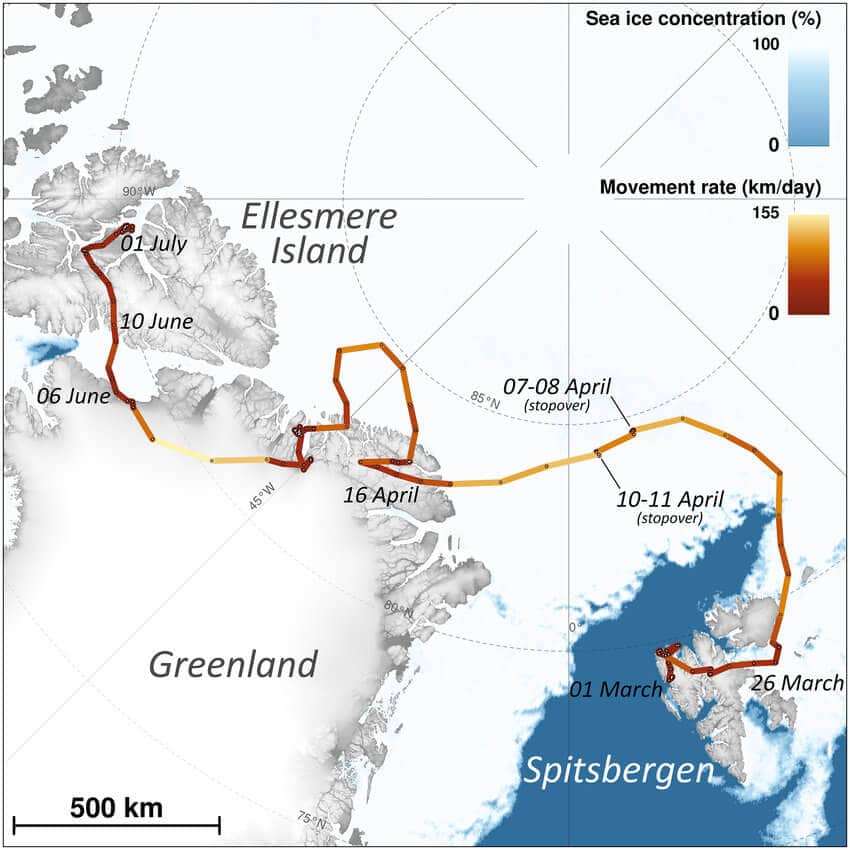
Arctic Fox's Journey From Norway To Canada (2018) Map
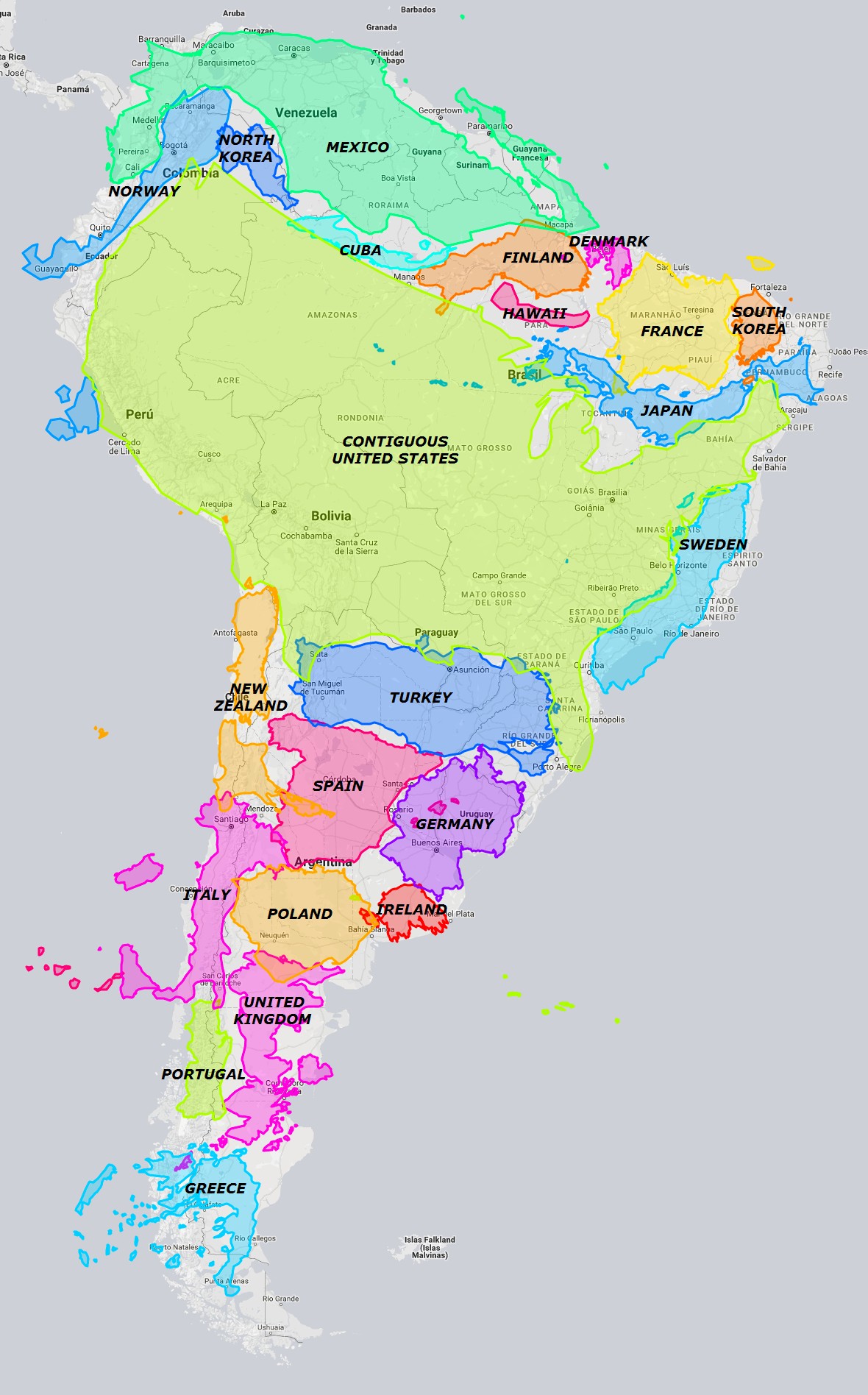
Why South America Is WAY Bigger Than You Think: The Map That Will Blow Your Mind
The Mexican Empire: When Mexico Was Bigger Than You Think

The Real Size of Countries: Why Your World Map Has Been Lying to You
Europe Through Irish Eyes: A Journey Across the Continent in Gaeilge

Italy in 1494: A Patchwork of City-States Before Columbus Changed Everything