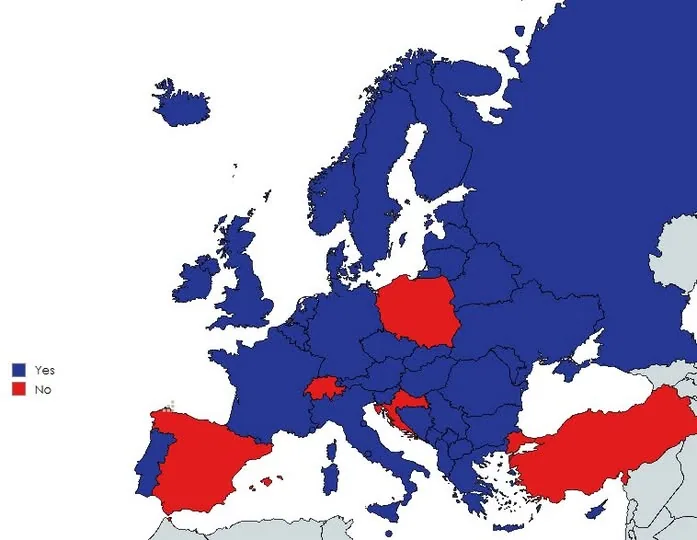
Map by Reddit user Fluid-Decision6262
Ever wondered why some countries seem to funnel all their visitors into their capital cities while others spread the love around? This fascinating map reveals which European nations see their capitals dominate the tourism game and which ones have surprise winners stealing the show.
The blue countries tell a straightforward story. If you visit the UK, chances are London will be your main destination. The same goes for most of Scandinavia and much of Central Europe. These capitals have successfully marketed themselves as the essential experience of their countries.
The Rebel Nations
But look at those red holdouts. Spain, Turkey, and Switzerland march to a different beat entirely. Barcelona outshines Madrid for international visitors, Istanbul leaves Ankara in the dust, and Zurich or Geneva typically sees more tourists than Bern. These countries offer a masterclass in distributed appeal.
The pattern reveals something interesting about European tourism psychology. Political capitals don’t always equal cultural or historical capitals in the minds of travelers. Sometimes a coastal city, a financial hub, or a region with better weather simply has more pulling power than the seat of government.
What This Means for Travelers
If you’re planning a European adventure, this map offers a subtle hint. The blue countries have concentrated their star power, so you might reasonably experience the heart of the nation by visiting just the capital. One trip to Paris gives you a solid taste of France’s essence. London encapsulates much of what makes Britain fascinating.
The red countries demand more exploration. Visiting only Ankara tells you almost nothing about Turkey’s appeal. You’d miss the Bosphorus, the bazaars, the living history of Istanbul. Similarly, Madrid is wonderful, but it’s not why most people fall in love with Spain.
The Economics Behind the Colors
This distribution pattern affects everything from hotel prices to flight connections. Capitals in blue countries often have better international connectivity and more accommodation options at various price points. They’ve built infrastructure around being the primary gateway.
The red countries split their tourism infrastructure investment. This can mean better deals in secondary cities, but sometimes complicated logistics for travelers trying to see multiple destinations.
The Takeaway
Neither pattern is inherently better. Concentrated tourism means easier planning but potentially more crowds. Distributed tourism offers authentic variety but requires more research and travel time between highlights.
What this map really shows is that Europe’s diversity extends even to how its countries present themselves to the world. Some nations have capitals that genuinely embody everything special about them. Others are more like collections of distinct personalities, each city offering something the capital cannot.
Next time you plan a European trip, consider whether you’re visiting a blue country or a red one. Your itinerary might need to change accordingly.
Help us out by sharing this map: