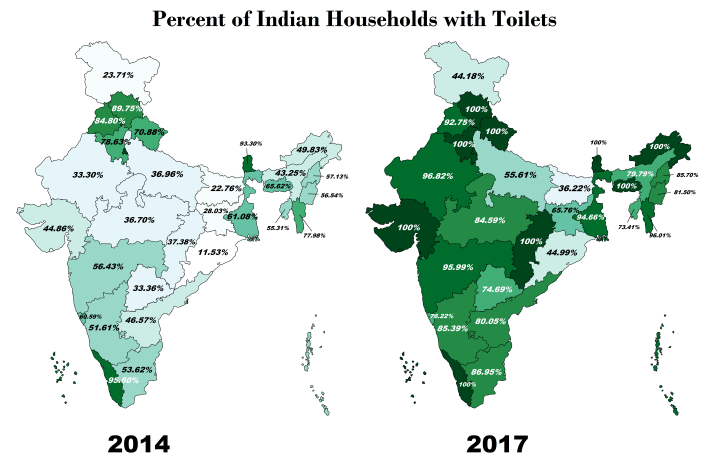
The map above shows the change in percentage of Indian households with toilets from 2014 to 2017, revealing one of the most ambitious public health campaigns in modern history.
The Swachh Bharat Mission
In 2014, then-newly elected Indian Prime Minister Narendra Modi launched the Swachh Bharat (Clean India) Mission with the ambitious goal of eliminating open defecation nationwide by 2019 – the 150th anniversary of Mahatma Gandhi’s birth.
When the campaign began, nearly 600 million Indians – roughly half the population – lacked access to toilets. This widespread practice of open defecation contributed to disease transmission, environmental contamination, and safety risks, particularly for women venturing out at night.
Dramatic Progress In Just 3 Years
The map visualizes the dramatic progress made in just three years. In 2014, only 42% of Indian households had access to toilets. By 2017, this figure had jumped to 64% – a 22 percentage point increase representing over 250 million people gaining access to basic sanitation.
Some states showed remarkable improvement. In Himachal Pradesh, household toilet coverage increased from 42% to 99%, while Haryana jumped from 72% to 98%. Even traditionally underdeveloped states like Bihar saw significant gains, moving from 22% to 52% coverage.
Part Of A Broader Regional Trend
This transformation represents part of a broader regional trend.
In 2000, approximately 65% of South Asia’s population practiced open defecation. By 2017, this had fallen to around 27%, with continuing improvements since then.
Beyond Building Toilets
The campaign’s approach went beyond simply building toilets. It tackled deep-rooted cultural practices through education, community-led initiatives, and behavioral change programs.
Village leaders, celebrities, and government officials all promoted toilet usage as a matter of dignity, safety, and health.
Economic incentives played a key role, with government subsidies providing approximately 12,000 rupees (about $190) per household for toilet construction. Local governments and NGOs supplemented these efforts with technical support and monitoring systems.
Impact & Future Challenges
The impact extends far beyond the numbers. Studies have shown that improved sanitation reduces diarrheal disease, enhances nutrition outcomes, and increases school attendance, particularly among girls. The World Health Organization estimates that for every $1 invested in sanitation, there’s a return of $5.50 in reduced health costs and increased productivity.
While challenges remain – including maintenance issues, water scarcity in certain regions, and pockets of resistance to behavior change – India’s toilet revolution represents one of the most significant public health achievements of the 21st century, transforming millions of lives across South Asia.
Help us out by sharing this map:
You May Also Like:
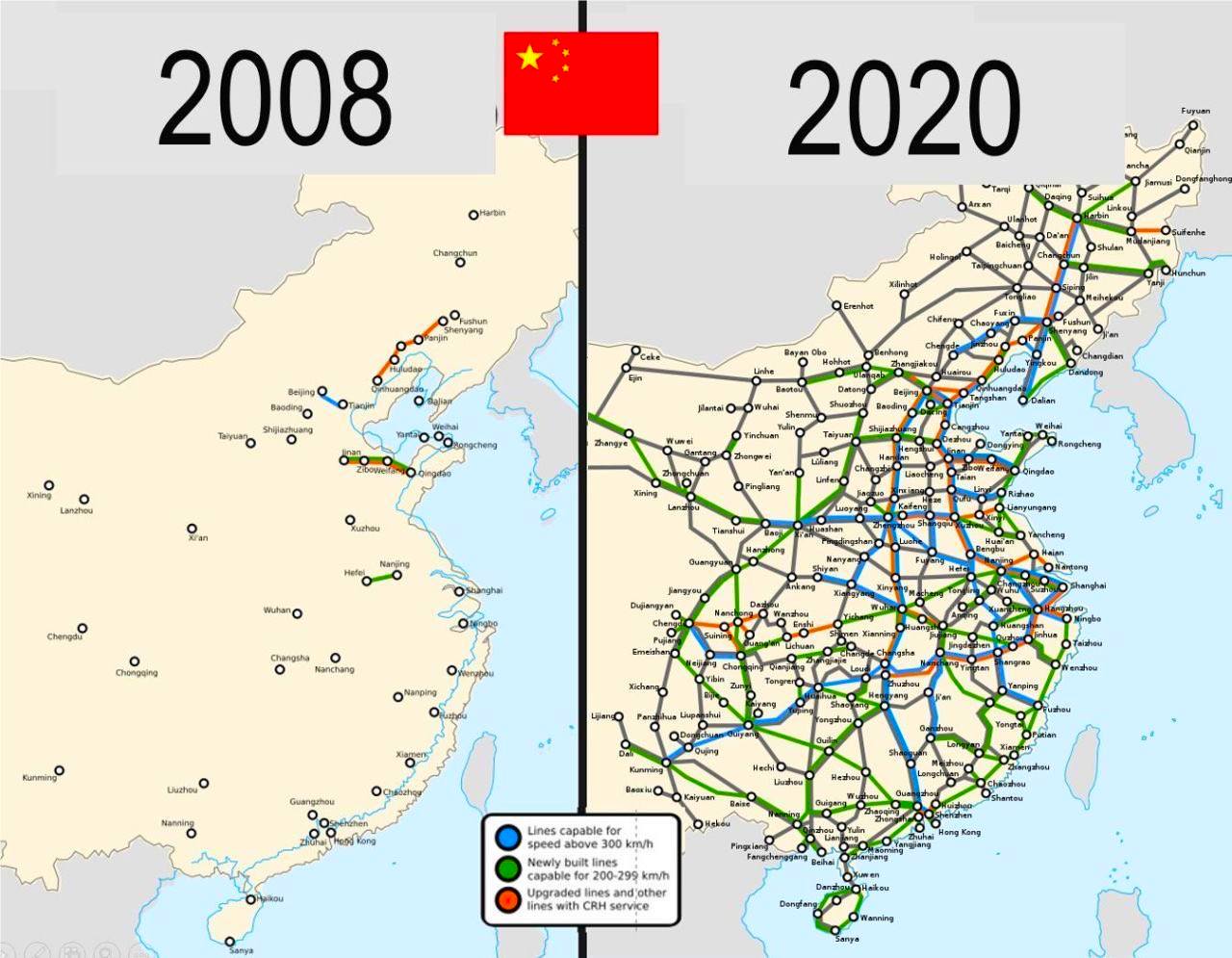
China's High-Speed Rail Revolution Map: From Zero to Global Leader in 12 Years
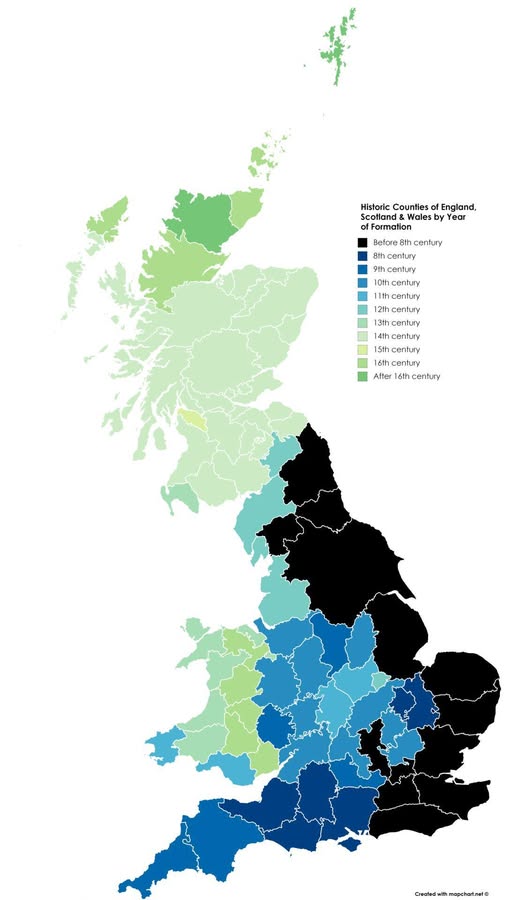
When Did Your County Actually Exist? A Colourful History of Britain's Borders
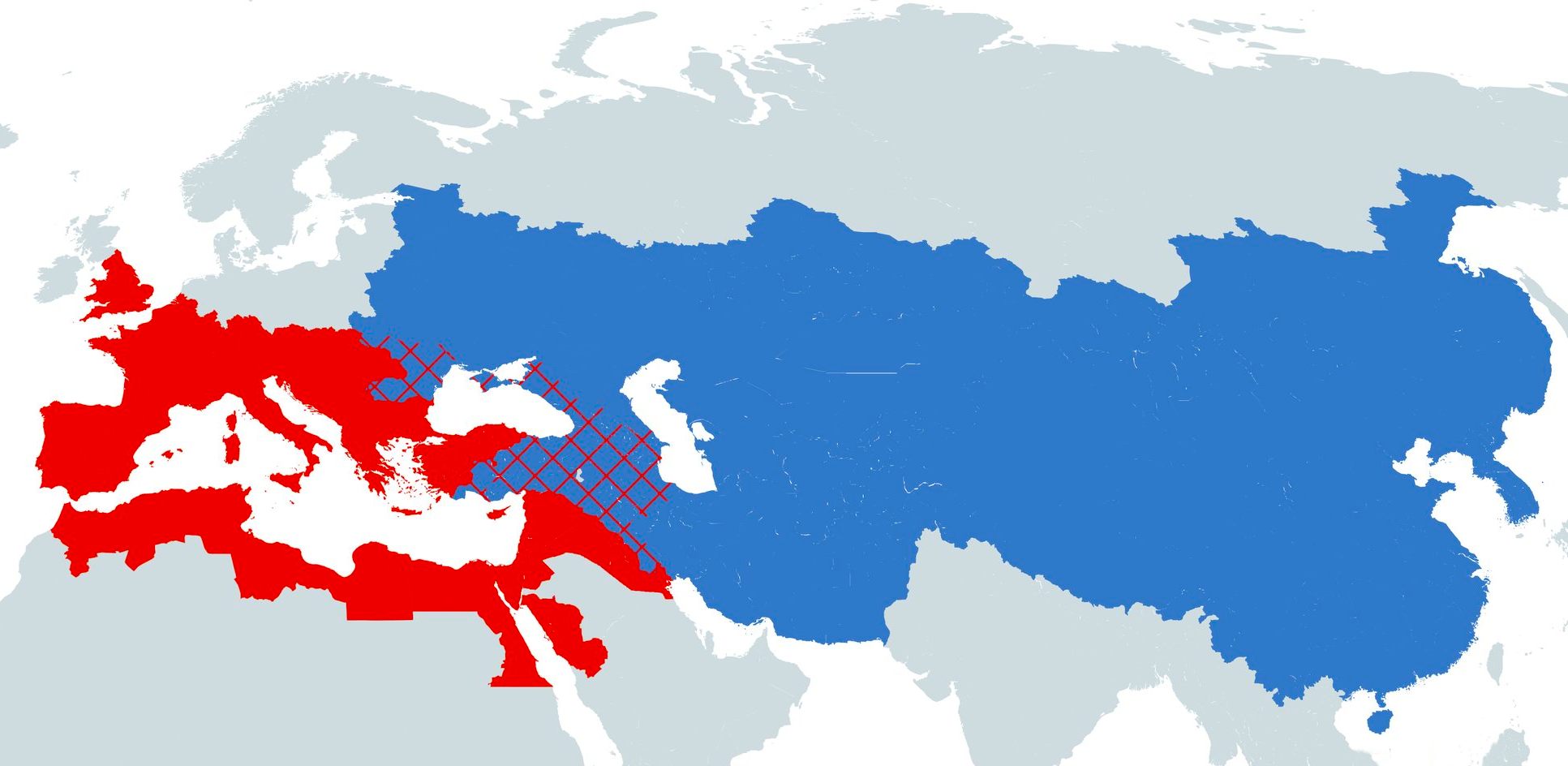
When Giants Ruled: The Roman and Mongol Empires at Their Peak

From Ancient Roman Kitchens to Modern Cuisines: How One Latin Word Spread Across Europe
Why Does Every European Language Have a Different Word for Cat?

Europe's Green Divide: The Surprising Story of Where Trees Really Grow
Why Your Zip Code Could Be Costing You Thousands in Property Taxes
1 thought on “India Map: Change In Percentage Of Households With Toilets”
Comments are closed.