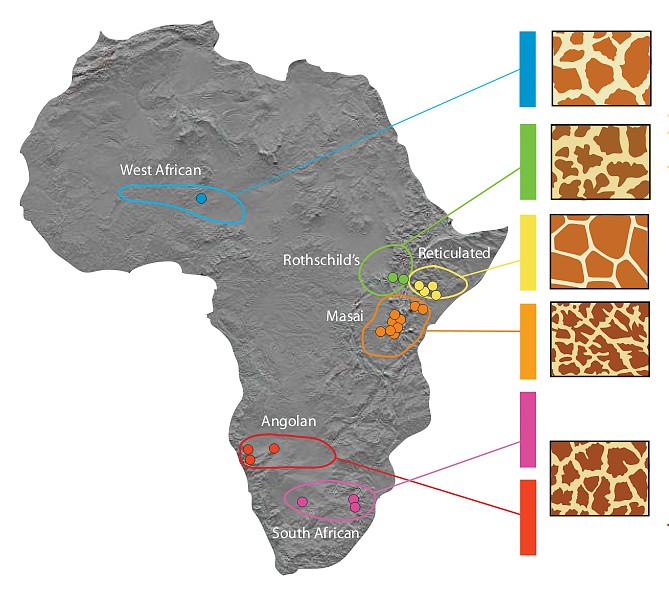
Africa’s Giraffe Species Distribution Map: A Visual Guide to Nature’s Living Camouflage Patterns
Looking at a map of Africa’s giraffe populations is like viewing nature’s own fashion show. Each region showcases its own distinct giraffe “brand,” complete with unique coat patterns that serve as both identification and camouflage.
The Big Picture: Four Species, Many Stories
The Giraffe Conservation Foundation (GCF), the world’s only organization dedicated solely to giraffe conservation, has revealed that there are four distinct species of giraffe in Africa: Masai, northern, reticulated, and southern.
These populations are geographically separated and have evolved unique characteristics that help them thrive in their specific environments.
Decoding the Patterns: Nature’s Fingerprints
Just like human fingerprints, each giraffe’s markings are individual. However, regional populations share similar pattern characteristics that make identification possible. The six distinct coat patterns shown on the map represent four species and their subspecies.
Northern Giraffes
The Northern giraffe species includes three subspecies with distinct patterns. The West African giraffe displays large, pale rectangular spots that help them blend into the lighter, more arid landscapes of their range.
The Kordofan giraffe has similar light-colored patterns adapted to Central African environments. Rothschild’s giraffes (also called Nubian giraffes), found primarily in Uganda and Kenya, showcase large dark brown spots that do not extend down their legs, creating a distinctive “white sock” appearance.
Stand-Alone Species
The Reticulated giraffe species of northern Kenya sports a distinctive dark coat with a web of narrow white lines, creating an intricate network pattern that gives them their name. The Masai giraffe species features a pattern that looks similar to oak leaves, with irregular, star-shaped blotches.
Southern Giraffe Species
The Southern giraffe species displays blotchy star-shaped spots that extend all the way down their legs. This species includes the Angolan giraffe subspecies, which sports its own variation of this southern pattern adapted to their specific habitat in southwestern Africa.
Why Patterns Matter
Understanding these regional differences isn’t just academic curiosity. A giraffe’s coat color can range from light tan to nearly black, depending on what the giraffe eats and where it lives.
These patterns represent millions of years of evolution, with each population developing camouflage perfectly suited to its specific environment.
The variations also help conservationists develop targeted protection strategies for each population.
Three of the four species of giraffe are considered Endangered, with two types Critically Endangered, making species-specific conservation crucial.
Looking Forward
Africa’s giraffe distribution map serves as both a celebration of biodiversity and a call to action. Each colored region represents not just a different coat pattern, but a unique evolutionary story spanning millennia.
As conservation efforts continue to show positive results, there’s hope that future generations will still be able to witness these magnificent living tapestries roaming Africa‘s landscapes.
The next time you see a giraffe, whether in a zoo or on safari, take a moment to appreciate not just its impressive height, but the intricate story written in its spots. Each pattern is a testament to the incredible diversity that makes Africa’s wildlife so extraordinary.
Help us out by sharing this map: