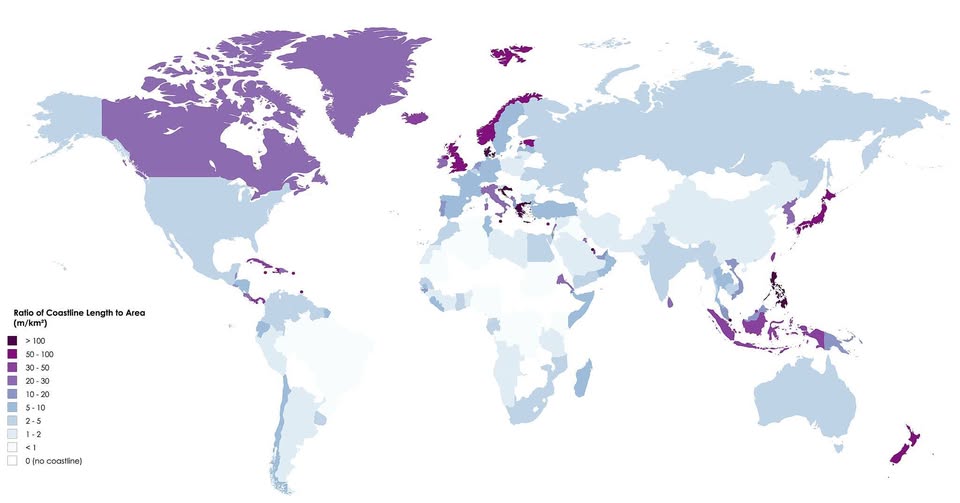
Map by Reddit user avervaryarso
That world map hanging in your classroom or the one you scrolled past on your phone? It’s been deceiving you your entire life.
The image you’re looking at shows countries in their true relative sizes, and chances are, it looks nothing like what you remember from geography class.
The Mercator Problem
Most world maps use the Mercator projection, created way back in 1569 by Gerardus Mercator. While brilliant for navigation, this projection massively distorts the size of countries as you move away from the equator.
Greenland appears roughly the size of Africa on traditional maps, but in reality, Africa is about 14 times larger. Amazed yet?
What This Map Reveals
When you see countries in their actual proportions, several shocking truths emerge.
Africa is an absolute giant, dwarfing North America, Europe, and China combined. Russia, while still enormous, isn’t quite the continental behemoth traditional maps suggest. Antarctica, usually stretched across the entire bottom of standard maps, shrinks considerably when shown accurately.
The countries near the equator finally get their due. Brazil is massive. The Democratic Republic of Congo could swallow multiple European nations. Indonesia sprawls across a space that would surprise most Westerners who’ve only seen it on conventional maps.
Why It Matters
This isn’t just a fun cartography fact for trivia night. Map distortion has real implications for how we perceive the world.
When Africa looks smaller than Greenland, we unconsciously diminish its importance, resources, and the 1.4 billion people who call it home. When Europe appears relatively larger, it reinforces outdated notions of Western dominance.
Our mental models of the world shape everything from foreign policy to resource allocation to how we understand global challenges like climate change and migration. Getting the basic geography right is step one.
The Technical Side
Creating a flat map from a spherical planet requires compromise. You can preserve shapes, sizes, or distances, but never all three perfectly.
The Mercator projection chose to preserve shapes and angles, sacrificing size accuracy. Other projections such as the Gall-Peters or Winkel Tripel attempt different balances, each with its own trade-offs.
Seeing Clearly
Next time you look at a world map, ask yourself what projection it uses and what biases that choice introduces. Better yet, spend time with a globe or interactive digital maps that let you compare countries side by side. The world is far more interesting when you see it as it truly is, not as centuries-old navigation tools portrayed it.
Help us out by sharing this map:
You May Also Like:
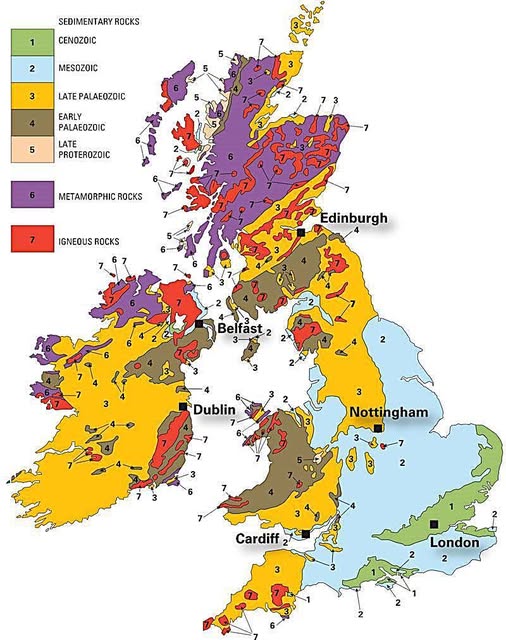
What's Beneath Your Feet? A Rock-Solid Tour of Britain and Ireland's Geology
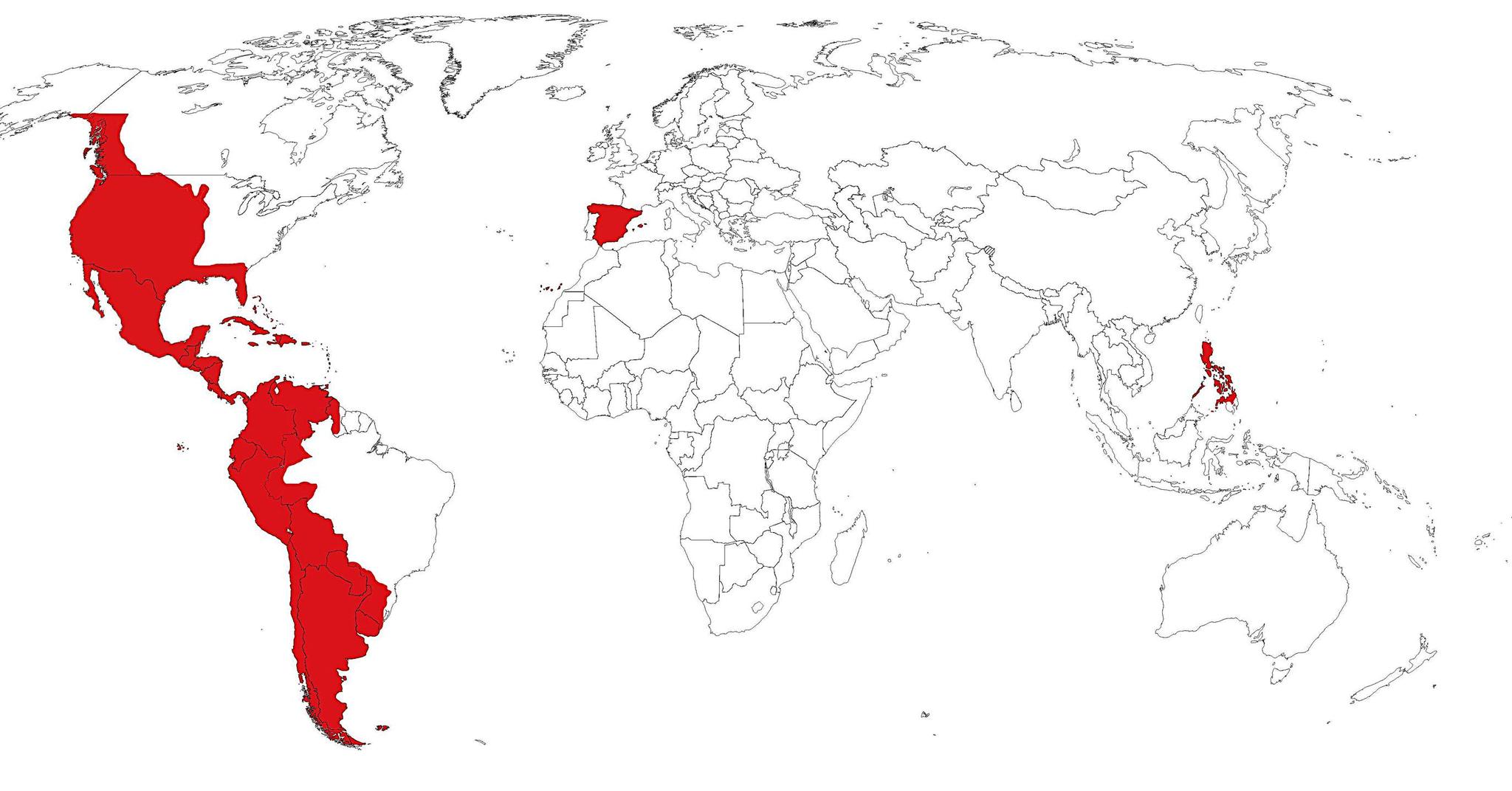
The Spanish Empire in 1790: When Spain Ruled a Quarter of the World
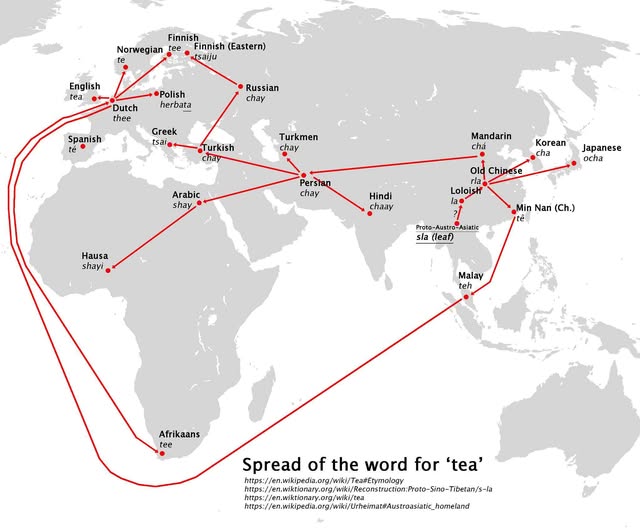
How One Word Conquered the World: The Global Journey of "Tea"
Why Poland Has Only One Metro System (And It's All in Warsaw)
When the World Was Still Being Drawn: A Rare 18th Century Map of the Southern Lands
Why Is Latin Still Running America? The Surprising Languages Behind Every State Motto

The Sky's the Limit: Exploring the World's Longest Non-Stop Passenger Flights